
About Us
How AI Container Data Centers Support High-Density Computing
Oct 12, 2026
AI is transforming the way data centers are designed and operated. AI training and inference workloads can generate substantial heat and require reliable power infrastructure, making power distribution, thermal management, and system integration essential considerations for modern data center projects. AI container data centers provide a modular approach to addressing these requirements by integrating critical infrastructure within a prefabricated enclosure.
IMMERSION ENERGY develops customized containerized data center solutions for demanding computing environments. A 40FT AI container data center can integrate IT racks, power distribution, cooling equipment, fire protection, and monitoring systems into a coordinated infrastructure platform, helping operators organize complex systems within a defined space.
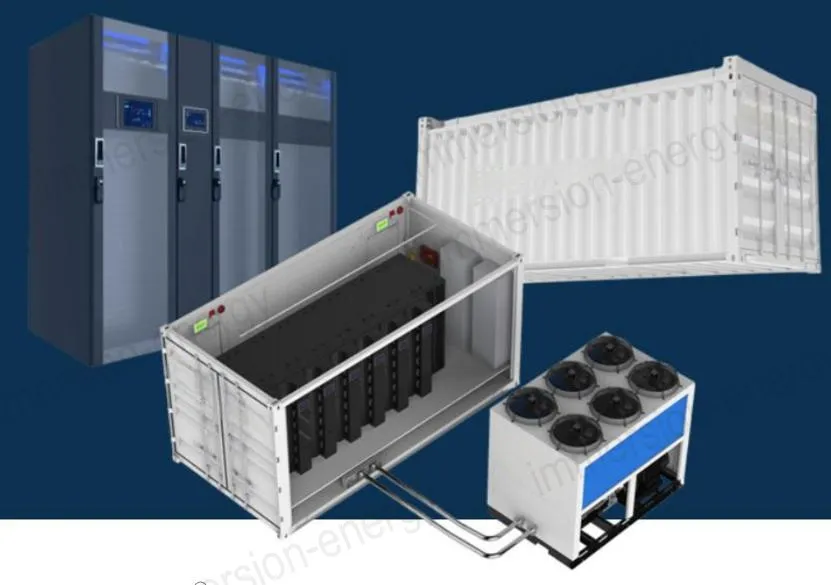
1. Integrated Design for Faster Deployment
Traditional data center construction may involve coordinating multiple equipment suppliers, installation teams, and infrastructure systems. A modular container solution consolidates essential components into a prefabricated structure, allowing key systems to be planned and integrated before on-site deployment.
This approach can simplify installation coordination and provide a more structured deployment process. It is particularly relevant for projects that require customized infrastructure, predictable equipment arrangements, or flexible capacity planning. Actual deployment time depends on project scope, site preparation, testing, and commissioning requirements.
2. Reliable Power Architecture for Critical Loads
AI computing facilities require a stable power supply to support servers, networking equipment, and associated infrastructure. A 2N power architecture uses two independent power paths designed to provide redundancy. When properly implemented, this arrangement can help reduce the impact of certain power-system failures and maintenance activities.
The overall level of availability depends on the design of the complete electrical system, including upstream power sources, distribution equipment, protection devices, and control arrangements. Therefore, power redundancy should be evaluated as part of the entire facility rather than as an isolated equipment feature.
3. Cooling Solutions for High-Density AI Racks
High-performance processors and accelerators can produce concentrated heat loads. Effective cooling design is therefore essential for maintaining suitable operating conditions and supporting equipment reliability.
A 45kW rear-door cooling unit can be integrated into an AI container data center to remove heat from the air discharged by IT racks. Depending on the system design, heat is transferred through the rear-door heat exchanger to a cooling medium, reducing the amount of heat that must be managed by the surrounding room environment.
An N+1 cooling configuration provides one additional cooling unit beyond the number required to meet the specified design load. This redundancy can help maintain cooling capacity during certain equipment failures or maintenance operations. The final configuration should be selected according to rack heat density, ambient conditions, cooling-medium parameters, and the required redundancy level.
4. Protection, Monitoring, and Environmental Adaptability
Data center infrastructure must account for environmental conditions as well as computing performance. C5M anti-corrosion protection can be incorporated into customized container designs for projects with demanding corrosion-resistance requirements. Integrated fire protection and monitoring systems also help support equipment safety and operational visibility.
Monitoring arrangements can provide operators with information about system status and selected operating parameters, depending on the installed instrumentation and control platform.
5. Choosing the Right Container Data Center
When selecting an AI container data center, project owners should evaluate IT power demand, rack configuration, power redundancy, cooling capacity, environmental conditions, safety requirements, and future expansion plans. A nominal capacity of approximately 500kW should not be treated as a universal configuration; the final design must be verified against the actual IT load and the capacity allocation for cooling and auxiliary systems.
With customized integration of power, cooling, protection, and monitoring systems, IMMERSION ENERGY helps customers develop container data center infrastructure suited to specific project requirements. A well-engineered container solution can provide a practical foundation for deploying high-density computing capacity while supporting organized installation, system coordination, and future infrastructure planning.
Recent Posts

October 26, 2016
The Most Successful Engineering Contractor
Oct 14, 2026
How Air Cooled Heat Exchangers Work in Oil and Gas
Contact US
Product Information
Quantity
Unit
Piece
Support order samples, customization, wholesale direct, and complete payment. If the product you look for does not have corresponding customized content, pls fill out the form below to contact us, and we will reply ASAP.