
About Us
How Air Cooled Heat Exchangers Work in Oil and Gas
Oct 14, 2026
In the oil and gas industry, efficient heat transfer is essential for maintaining process stability, protecting equipment, and ensuring continuous production. From natural gas processing and refinery operations to petrochemical manufacturing, industrial facilities need reliable cooling systems to manage heat generated during production. An Air Cooled Heat Exchanger is widely used in these applications because it removes heat from process fluids by transferring it to ambient air, reducing dependence on cooling water. For facilities operating in water-scarce regions or remote industrial locations, air cooled heat exchangers can be an important part of an effective heat management strategy.
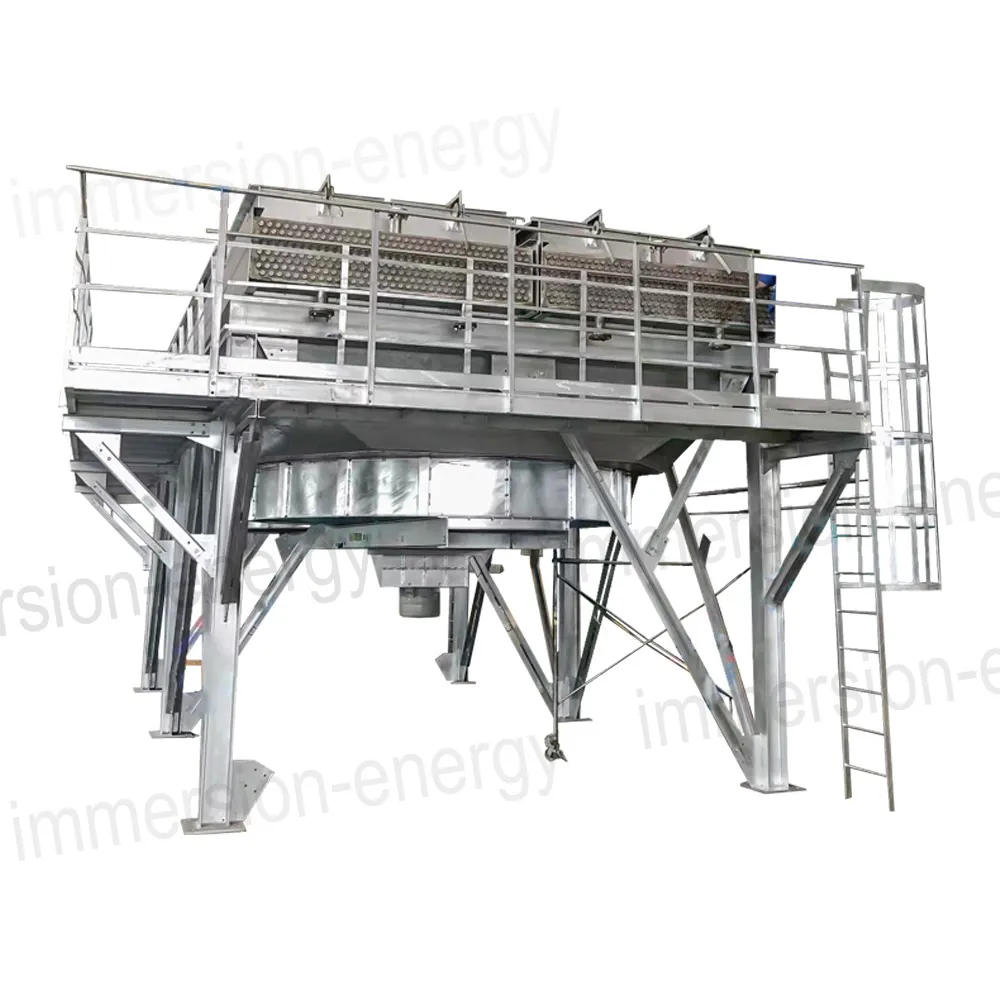
How Does an Air Cooled Heat Exchanger Work?
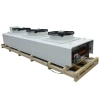
An air cooled heat exchanger typically consists of finned tubes, headers, fans, a supporting structure, and a drive system. Hot process fluid flows through the tubes, while the external fins increase the heat transfer surface area. Fans move ambient air across the finned-tube bundle, allowing heat to pass from the process fluid through the tube walls and fins into the surrounding air. The cooled fluid then returns to the process system or moves to the next stage of production.
Depending on the project requirements, air cooled heat exchangers can use forced-draft or induced-draft fan arrangements. Their designs can also be customized according to the required heat duty, operating pressure, process fluid properties, ambient temperature, and available installation space.
Key Applications in the Oil and Gas Industry
Air cooled heat exchangers are used throughout the upstream, midstream, and downstream sectors of the oil and gas industry. Typical applications include:
1.Natural Gas Processing: Cooling natural gas and process streams to meet downstream operating requirements.
2.Refineries and Petrochemical Plants: Removing heat from process fluids and supporting temperature control in industrial processes.
3.Compressor Systems: Cooling lubricating oil and other compatible fluids to help maintain suitable operating conditions.
4.Hydrocarbon Cooling and Condensation: Rejecting heat from hydrocarbon streams in applications designed for the required cooling or condensation duty.
5.Remote Industrial Facilities: Providing heat rejection where cooling water is limited or where water treatment and circulation infrastructure would be difficult to maintain.
The exact application depends on the process conditions and the thermal design of the equipment.
Advantages of Air Cooled Heat Exchangers
Compared with water-based cooling systems, air cooled heat exchangers offer several potential benefits for industrial projects.
1.Reduced Cooling Water Demand: Heat is transferred to ambient air, avoiding the need for cooling water in the heat rejection process itself.
2.Simplified Supporting Infrastructure: Facilities may require less cooling-water piping, treatment equipment, and associated circulation infrastructure.
3.Adaptability to Different Operating Environments: Material selection, protective coatings, and structural design can be tailored to site conditions, including outdoor and corrosive environments.
4.Flexible Equipment Configuration: Fan arrangements, tube materials, fin designs, and control systems can be selected according to project requirements.
5.Support for Continuous Industrial Operations: Properly engineered equipment can provide dependable heat rejection when designed for the required thermal duty and operating conditions.
However, air cooled heat exchangers rely on ambient air temperature. Their cooling performance may decrease during hot weather, and dry cooling alone cannot cool a process fluid below the entering air temperature. Engineers should therefore assess seasonal temperatures and required outlet temperatures during system design.
What Should Be Considered When Selecting an Air Cooled Heat Exchanger?
Choosing the right air cooled heat exchanger involves evaluating more than nominal cooling capacity. Important factors include process fluid composition, flow rate, inlet and outlet temperatures, operating pressure, corrosion potential, and the required heat rejection duty.
For oil and gas applications, material compatibility and mechanical design are particularly important. Tube and fin materials should be selected according to the process fluid, operating environment, and project specifications. Engineers should also consider fan performance, power consumption, noise limits, maintenance access, wind loads, and installation requirements. Where specified by the project, equipment design should comply with applicable industry standards, such as API 661 and relevant ASME requirements.
For sour-gas service or other demanding applications, additional attention should be given to material suitability, corrosion control, pressure containment, and applicable safety requirements. A detailed review of operating conditions helps ensure that the selected equipment is appropriate for its intended service.
IMMERSION ENERGY Air Cooled Heat Exchanger Solutions
IMMERSION ENERGY provides air cooled heat exchanger solutions for oil and gas, refining, petrochemical, chemical processing, power generation, and other industrial applications. Depending on project requirements, equipment can be configured with different finned-tube designs, forced-draft or induced-draft arrangements, and suitable materials and protective coatings.
Project-specific engineering can take into account thermal performance, operating pressure, ambient conditions, corrosion resistance, noise requirements, and maintenance needs. Applicable design standards and optional configurations should be confirmed according to each project's technical specifications.
By matching equipment design to actual process conditions, IMMERSION ENERGY helps industrial customers identify suitable air cooled heat exchanger solutions for reliable heat rejection. With appropriate engineering and material selection, these systems can help reduce cooling water demand and support stable, efficient operation across a wide range of oil and gas applications.
Recent Posts

October 26, 2016
The Most Successful Engineering Contractor

Contact US
Product Information
Quantity
Unit
Piece
Support order samples, customization, wholesale direct, and complete payment. If the product you look for does not have corresponding customized content, pls fill out the form below to contact us, and we will reply ASAP.